Implementing school-wide interventions can spark a lot of anxiety for educational leaders. Deciding how to structure support across an entire building, manage schedules, and allocate staff can feel overwhelming. However, when designed thoughtfully, a system of school-wide interventions becomes one of the most effective tools for ensuring every student receives targeted support without sacrificing core classroom instruction.
To build an effective model, schools must first align on what truly constitutes an intervention. A targeted intervention meets three specific criteria: it is delivered in a small group or individual setting, it directly teaches an explicit skill rather than just providing extra practice, and it is facilitated with fidelity by an educator trained in that specific approach. Clarifying this distinction prevents common missteps, such as confusing broad strategies or extra practice opportunities with true skill-based intervention.
Historically, supporting students who require extra help often forced schools into difficult trade-offs. Interventions either had to happen inside the busy classroom while trying to keep other students engaged, or through a pull-out model where students missed crucial grade-level instruction, core literacy blocks, or favored specialized classes like music and physical education. Moving toward scheduled, school-wide intervention blocks solves this issue by creating dedicated, protected time for targeted support that does not compete with universal Tier 1 classroom instruction.
When introducing school-wide interventions, the most effective strategy is to start small before scaling up. Moving an entire school into a brand-new intervention model simultaneously can create unforeseen logistical hurdles. Beginning with a single grade-level pilot for a defined period, such as four to five weeks, allows leadership teams to uncover blind spots, refine logistics, and adjust scheduling expectations before expanding to other grades.
Mastering the master timetable is central to this success. Administrators should intentionally build intervention blocks into the schedule right from the start, even if a grade level is not yet actively using that time. Establishing these protected blocks early prevents future scheduling conflicts and avoids forcing staff into complex timetable overhauls later. At the elementary level, staggering intervention blocks across different times of the day such as a Grade 3 block followed by Grade 2 and then Grade 1 allows learning support teachers and specialized personnel to work across multiple grade levels, dramatically reducing group sizes. In secondary environments, creating a unified school-wide block offers the flexibility to schedule hard-booked interventions for specific students while offering self-directed study or elective support for others.
An effective intervention block relies heavily on data-informed decision-making. Initial universal screening and benchmark assessments identify the broad focus area, whether it is foundational reading skills, targeted math concepts, or explicit writing strategies. When necessary, diagnostic assessments drill deeper to isolate the exact skill gaps students need to work on.
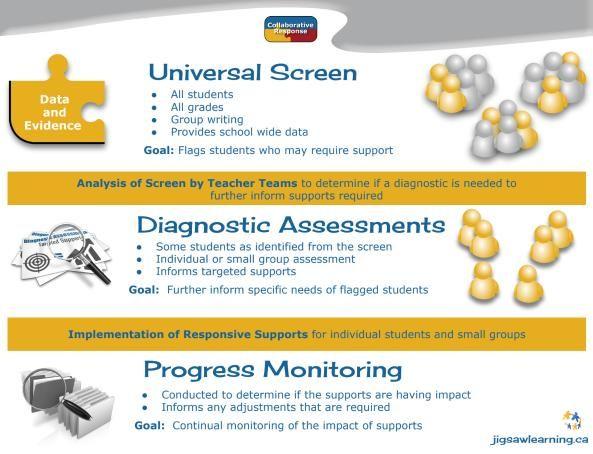
Rather than leaving intervention groups open-ended, which risks permanently tracking students into fixed ability groups, schools should establish clear, predictable cycles with firm start and end dates. Running targeted cycles of two to five weeks gives teams a defined structure to deliver explicit instruction, re-assess student progress, and regroup students based on updated data.
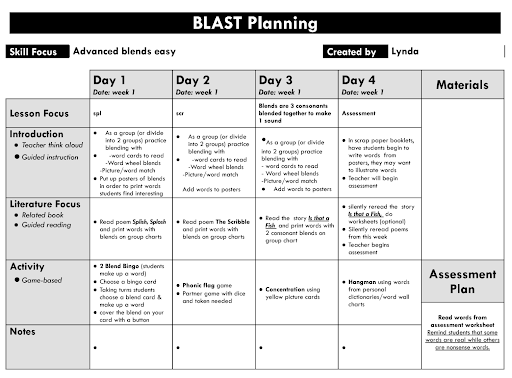
To keep interventions manageable and sustainable, staff benefit from a consistent, repeatable lesson structure across all intervention groups. For example, a 30-minute reading intervention block can be structured into three distinct 10-minute segments: ten minutes of explicit skill instruction, ten minutes applying that skill in an authentic learning task, and ten minutes practicing through an engaging game or activity. Packaging these resources into ready-to-use skill kits or expanding file folders allows staff to reuse highly effective lesson sets whenever future students demonstrate the same skill need, avoiding the need to continuously recreate materials. The visual below is an example of a lesson plan used at our school based on the focus area of ‘Advanced Blends’. Access a template for a weekly lesson plan for literacy intervention which could be easily transformed for numeracy intervention as well.
Once this structural framework is firmly established, it can easily expand beyond academic interventions. Schools can seamlessly integrate social-emotional support, executive functioning skills, or self-regulation groups into the existing schedule without disrupting the rest of the school day. Visual management systems and custom tracking boards further help classroom teachers keep track of where their students are placed and monitor their progress from cycle to cycle.
Designing school-wide interventions is a journey that takes time, flexibility, and a willingness to learn through trial and adjustment. By starting with a focused pilot, protecting intervention time within the timetable, utilizing structured cycles, and creating repeatable lesson plans, leaders can build a responsive system that systematically meets the needs of every learner.
If you are exploring or refining school-wide interventions in your school community, we would love to connect. Reach out to us at to share your experiences, ask questions, or continue the conversation.
Reflecting on Piloting