You have carved out valuable time in your schedule for collaborative planning, which is a significant step toward building a strong professional culture. However, merely providing time is not enough, as without a clear focus, that time can quickly devolve into extended prep, forced collaboration, or general frustration. The key to optimizing this time is not through micromanagement, but through high-impact goals and inquiry questions that honor teacher professionalism and autonomy. By establishing clear goals, refining them using data, and setting up systems for monitoring, leaders can ensure that every minute of collaborative time remains focused, meaningful, and centered on driving student achievement.
How can you establish goals connected to school priorities?
The first challenge in any team is avoiding unfocused collaboration where one person dictates the work or the team defaults to low-impact tasks. Goals provide the necessary structure to prevent this by ensuring the team's focus is directly connected to school and divisional priorities. If the school goal is to ensure reading success for every student, then every team’s collaborative goal should relate to reading to ensure everyone is rowing in the same direction. This autonomy should be informed by a collective look at evidence, where teams ask simple questions about their students' strengths and areas of need. By identifying lagging skills or areas of stagnant growth, the team can draft a goal that feels like the right next step. Teams maintain their autonomy during this process because while the data might point to multiple needs, the group chooses which one to focus on based on their specific interest and capacity for growth.
Initiate the creation of goals through a simple data review process.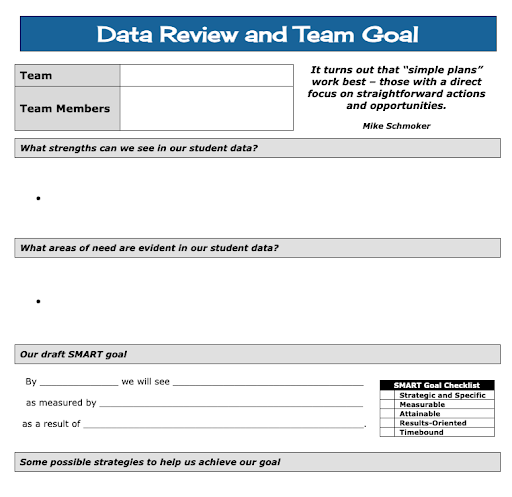
How can you refine goals to ensure clarity and measurement?
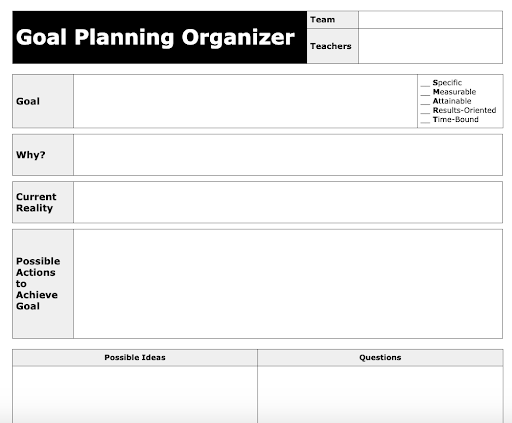
Once a team has a draft goal, leaders should guide them through a refinement process to ensure the objective is both high-impact and measurable. This starts by asking why the team chose a specific goal to surface their purpose and ensure deep investment. From there, the team must establish a baseline reality by identifying exactly what the data currently says about their students in that area. A vague starting point like feeling that students struggle with vocabulary becomes a refined goal when it specifies that the current 40% of students scoring below proficiency should be reduced to 25% by the end of the semester. To capture the team's initial excitement, you should immediately envision the actions needed to achieve the goal and allow for cross-team feedback. Posting these goals in a shared space allows other teams to offer suggestions on resources or strategies, which builds system-wide awareness and alignment. Here is a Goal Planning Organizer poster that could be used for teams to share their goals and gather feedback from their colleagues.
How can you monitor for accountability without micromanagement?
Leaders must maintain a delicate balance by being tight on goal alignment but loose on the day-to-day process. Monitoring should be viewed as a form of support rather than traditional supervision. This involves setting regular signposts throughout the year where the administrative team joins the conversation to ask how progress is going and what resources are needed to continue growing. Accountability should also be horizontal, meaning teams report their progress to their peers during staff meetings or professional development days. This shared reporting creates opportunities for celebration and allows for the cross-pollination of effective strategies across the entire school. When one team shares a success, it often inspires another team to adopt a similar practice, which organically grows leadership capacity across the staff.
This extensive planning guide provides teams guidance throughout the school year based on a goal for their collaborative planning teams. Dates, actions and planned opportunities for sharing the team's work with leadership are embedded.

By establishing purposeful goals, you give teams the structure and autonomy they need to transform collaborative time from a mandated block into an engine for sustained improvement.
Please reach out to share your insights, challenges, and triumphs along with your questions, resources or suggestions related to this topic. Connect with us at or .