Welcome to the Collaborative Team Meetings Companion Site!
For the best viewing experience, we recommend accessing this page on a desktop or laptop computer rather than a mobile device.
As you explore Collaborative Team Meetings: The Piece Connecting PLCs and MTSS, access ready-to-use templates, samples, and tools to support your work.
Browse all resources organized by chapter below, plus additional materials and learning opportunities to deepen your Collaborative Response practice.
Chapter 1 - Introducing the Collaborative Team Meeting
| 1.1 - Collaborative Response: Three Foundational Components That Transform How We Respond to the Needs of Learners - learn more about the foundational text to develop an understanding of Collaborative Response, including access to the introductory chapter for free, which includes a link to the book's companion website. |
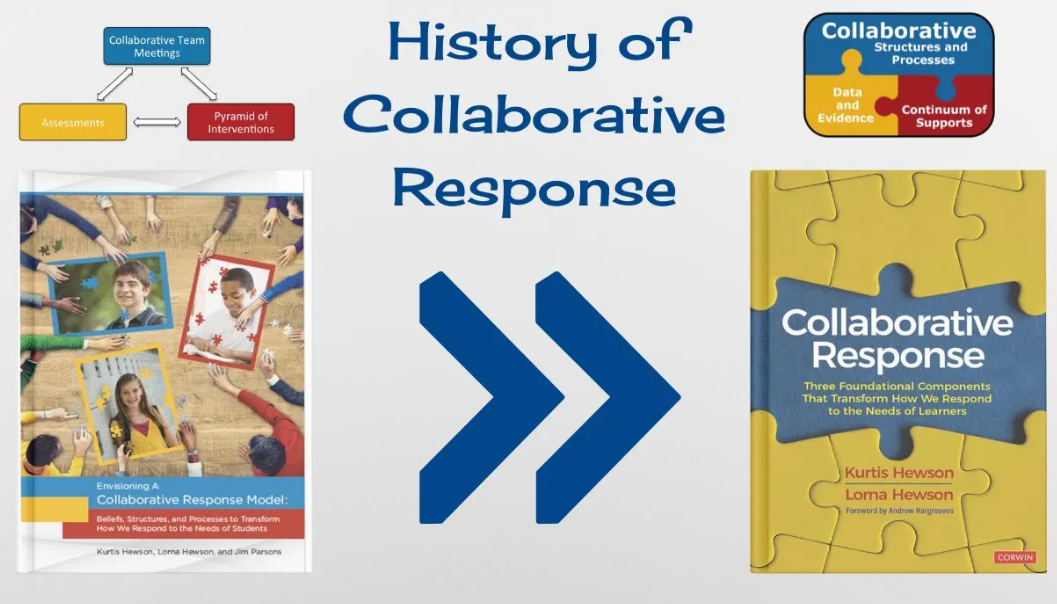
| 1.2 - History of Collaborative Response - overview sharing the origin story for Collaborative Response. |
| 1.3 - Overview of Collaborative Response - short article sharing what is Collaborative Response, with links to additional resources. |
| 1.4 - Overview of Collaborative Response - short video, sharing the foundational components of Collaborative Response. Ideal for introducing Collaborative Response to your educational community. |
| 1.5 - Introducing Collaborative Response: Ten Considerations for Leaders - article sharing ten considerations when introducing Collaborative Response to your school community, with multiple links and related resources. |



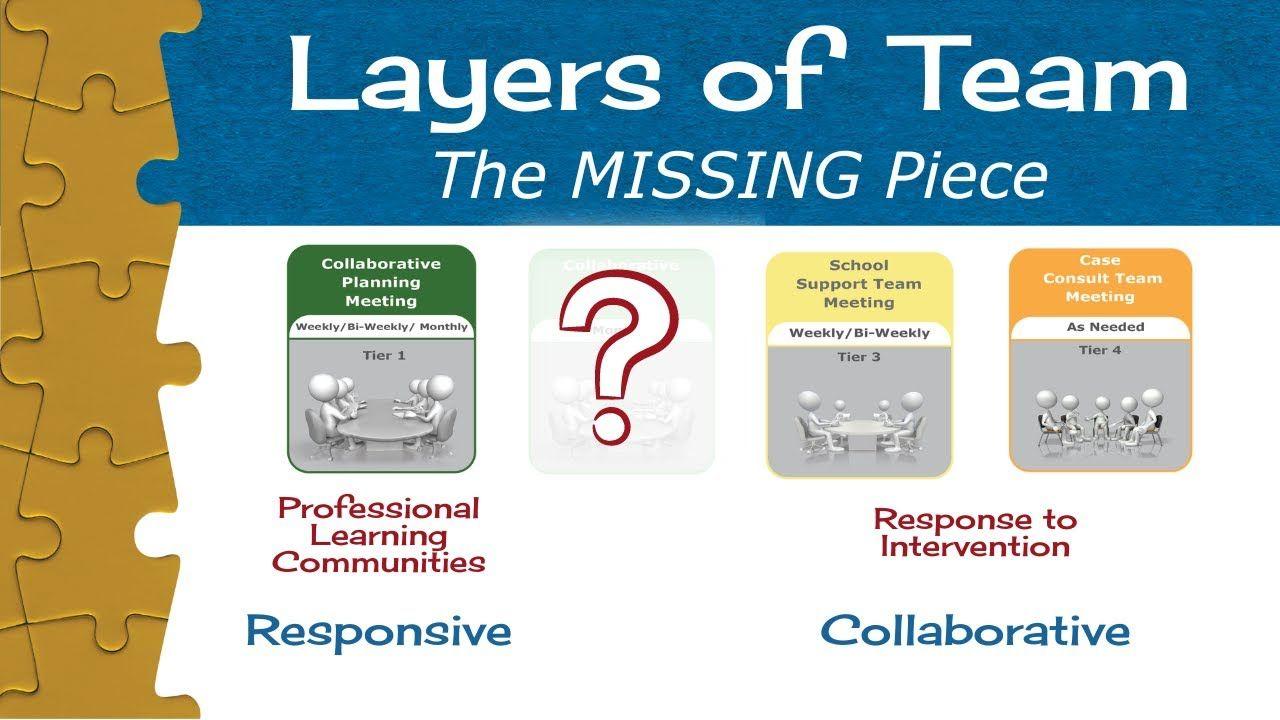
Chapter 2 - Understanding the Layers of Team
| 2.1 - Every Child Deserves a Team: Layering Team Meetings - webinar in which Lorna shares through multiple school samples and resources, the value of layering collaborative structures and processes within a school and how the introduction of a very intentional collaborative team meeting can work to respond to the needs of students collaboratively, while increasing the instructional capacity of everyone involved. |
| 2.2 - Team Meeting Overview - template for planning to determine the types of collaborative structures happening in the school, determining the purpose of each, who is involved, duration and frequency. Assists in the layering of team meetings to support the needs of students in connection to all levels of support. |
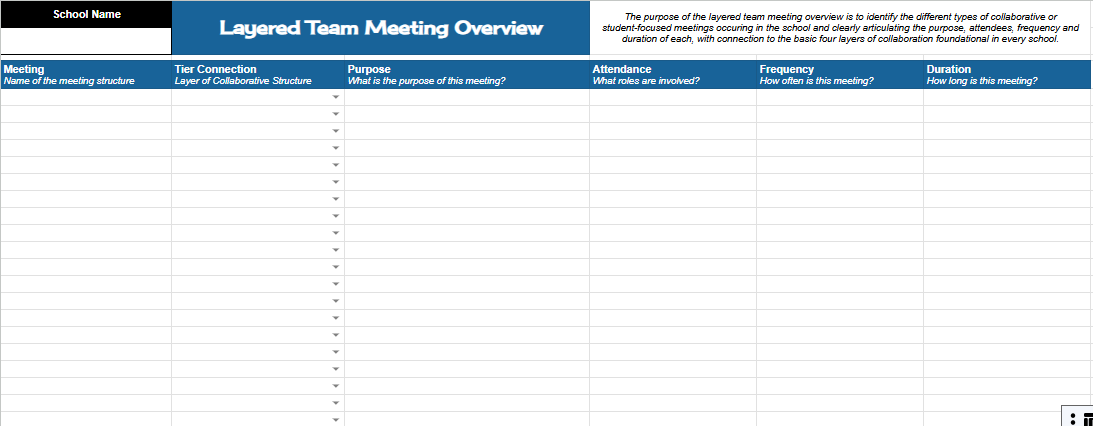
| 2.3 - Layered Team Meeting Overview - Google sheet template to connect meetings occurring in a school with the four layers of collaboration (meetings are automatically colour-coded when aligned with one of the four layers). |
 | 2.4 - Team Meeting Overview Samples - collection of various school and divisional team meeting overview samples, sharing different formats and considerations when developing this critical resource for schools. |
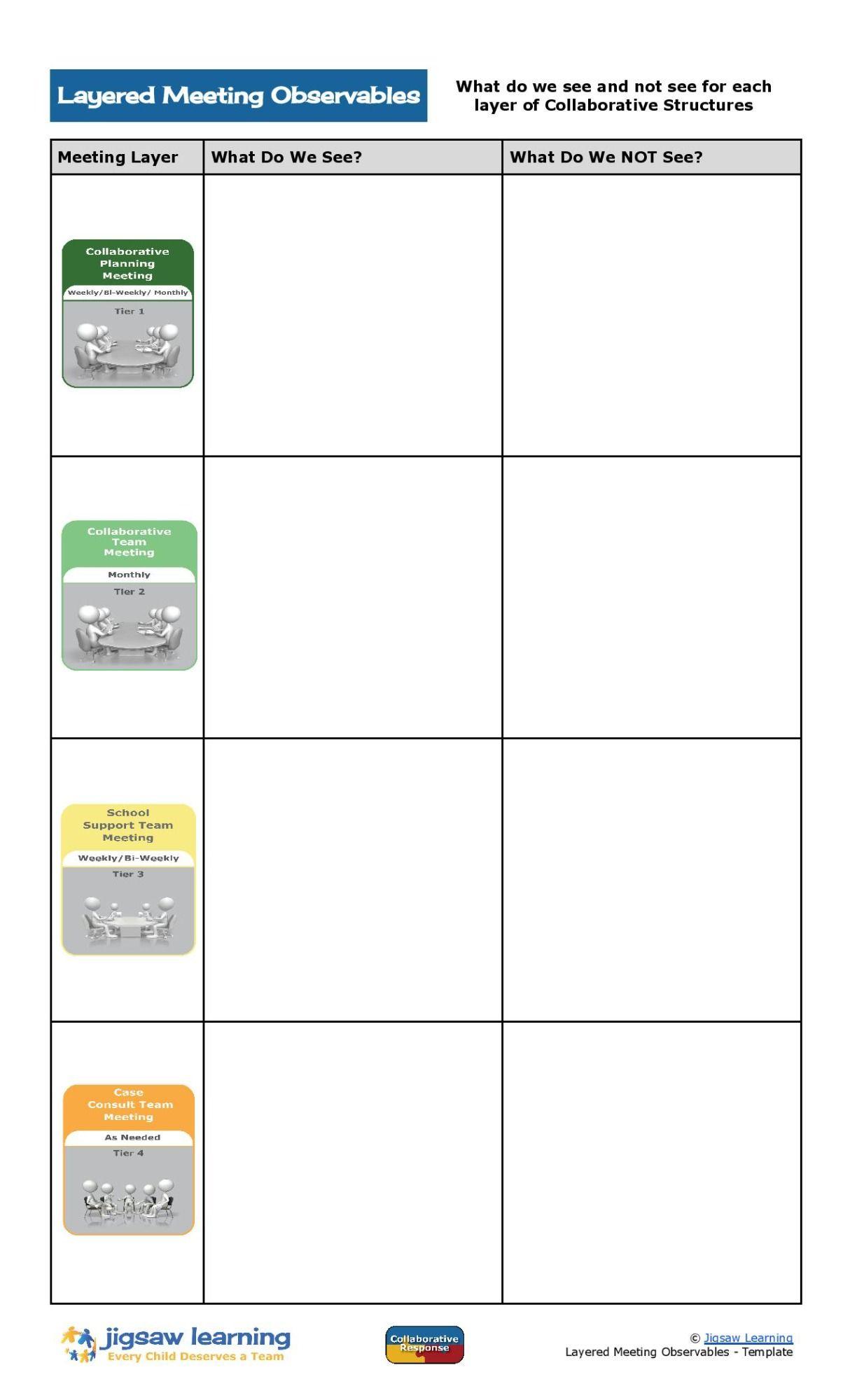 | 2.5 - Layered Meeting Observables - template to assist teams in examining each layer of team integral to Collaborative Structures and Processes, determining observables and non-observables for each. |
| 2.6 - Team Meeting Overview Poster - poster to describe the layers of team in a school to provide further clarity for the staff team. |
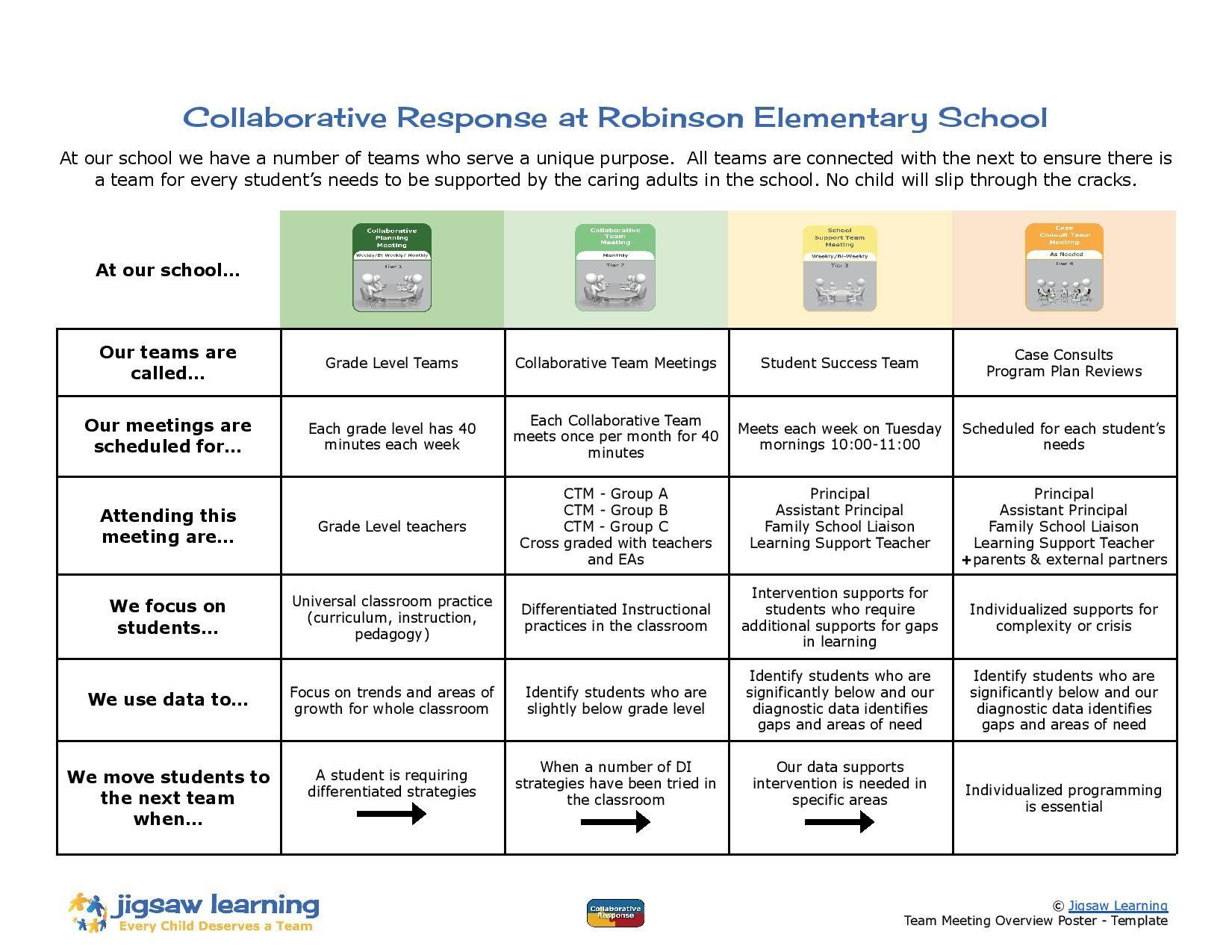
| 2.7 - Team Meeting Overview Poster for Robinson Elementary - sample of a completed team meeting overview for Robinson Elementary. |
| 2.8 - Reduce the Number of Meetings...By Adding One More - overview of the four layers of team, reinforcing that the introduction of the collaborative team meeting can reduce the number of meetings focused on individual students. |
| 2.9 - Scaffolding our Collaborative Response: Purposeful Layering of Team Meetings - blog post describing the layers of team and how they connect to one another. |
| 2.10 - The Missing Piece - keynote address where Kurtis and Lorna discuss the four layers of teams, with multiple examples provided. |
| 2.11 - Creating Focus for Collaborative Planning WITHOUT Micromanaging Your Teams - on-demand workshop examining how leaders can create aligned goals for collaborative planning that ensures alignment and focus, while honouring the professionalism of teacher teams. |
| 2.12 - Five Considerations for School Support Teams - on-demand workshop to support leaders in understanding and establishing effective school support teams. |
| 2.13 - Six Considerations When Planning to Meet the Needs of ONE Child: Examining Case Consult Team Meetings - on-demand workshop breaking down considerations for managing and operationalizing case consult teams with particular attention to the involvement of parents and external partners. |
| 2.14 - Reduce Your Meetings...By Adding One More! - Ep 11 - podcast that explores the contradiction of reducing the number of meetings by adding one more through an in depth discussion of the various layers of team meetings that align with the continuum of supports as part of Collaborative Response. |
| 2.15 - Aligning Tiers of Support With Team Meetings - poster that illustrates how different levels of student support (Tiers 1-4) in a school setting correspond with various team meetings. |







Chapter 3 - The Collaborative Team Meeting In Action
| 3.1 - CTM Starter Kit - pdf document of resources to support you in facilitating your first Collaborative Team Meeting. This kit includes everything you need to get started with confidence and clarity. |
| 3.2 - Facilitating Effective Collaborative Team Meetings - online course to support anyone responsible for facilitating collaborative team meetings, including video and document resources to ensure CTM's have their optimal impact. |
| 3.3 - Collaborative Team Meetings for Educational Assistants - online course designed specifically for EAs, provides the essential clarity they need to become confident and active participants in your school's collaborative team meetings. |
| 3.4 - The Psychology Behind Collaborative Team Meetings - Ep 10 - Kurtis Hewson addresses the contradictory statement "support the student by not focusing on them during the Collaborative Team Meeting" as well as a number of collaborative structures and processes that are implemented intentionally to create psychological safety for staff as they build their collective efficacy. |
| 3.5 - Four Mistakes Leaders Make When Planning for Collaborative Team Meetings - on-demand workshop in which Kurtis explores four mistakes we see leaders make when planning for their first collaborative team meetings, whether the critical structure is new to the school or being reintroduced for another year. |
| 3.6 - Four Mistakes Leaders Make When Setting Up Collaborative Team Meetings - Ep 12 - podcast that explores four mistakes leaders make when first setting up collaborative team meetings in schools, as well as ideas to consider to avoid and/or overcome these mistakes. |


Chapter 4 - Essential Structures for the Collaborative Team Meeting
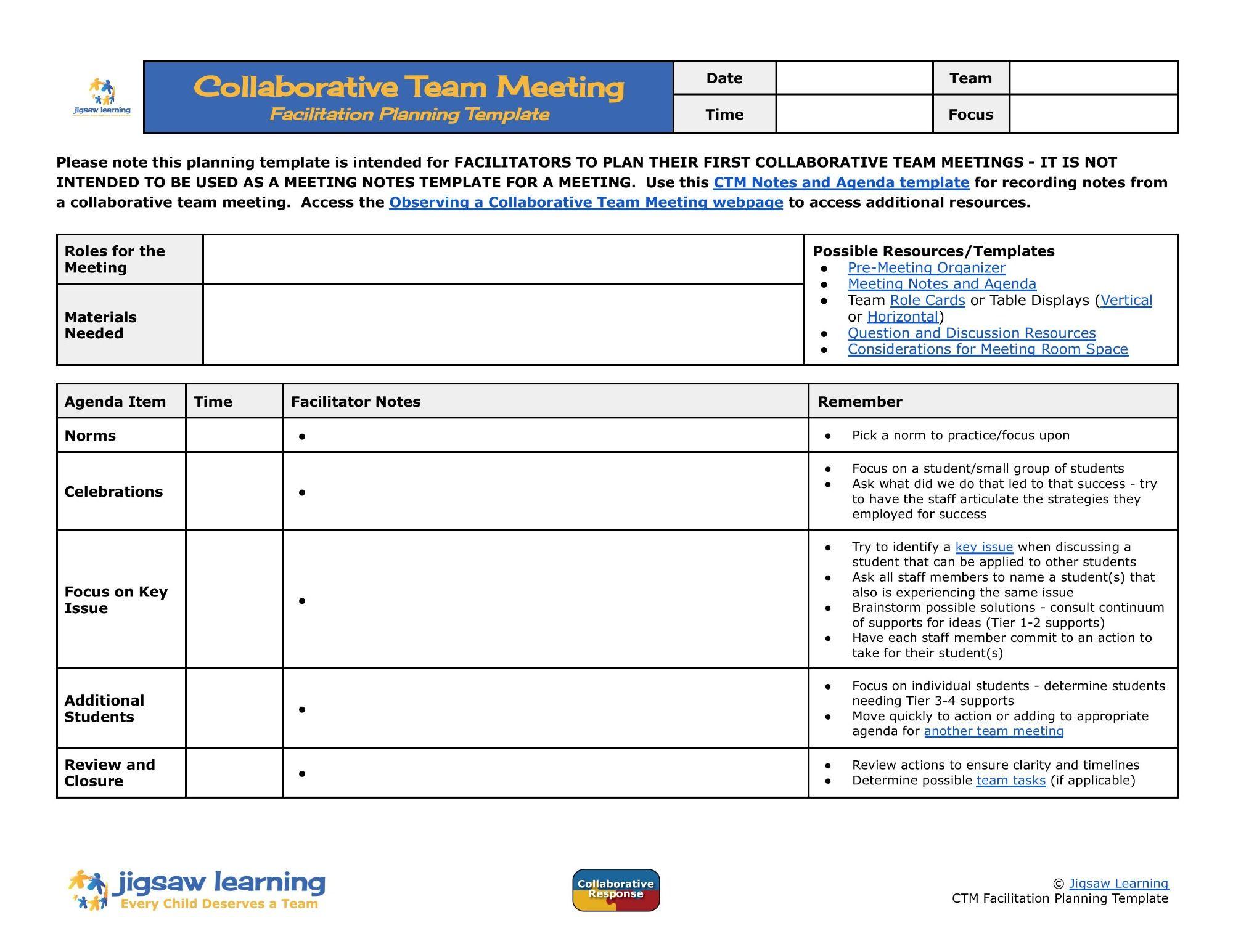
| 4.1 - CTM Facilitation Planning Template - template intended to support the role of the facilitator. The planning template provides guidance in the structure of the meeting with space for individual notes. |
| 4.2 - Scheduling CTM Focus Areas Samples - collection of various school and divisional team samples, sharing how different schools have scheduled areas of focus for CTM's during the course of the school year. |
| 4.3 - Introducing Collaborative Team Meetings: Aligned Focus - blog posting that describes the importance of having an aligned focus for collaborative team meetings. |
| 4.4 - Collaborative Leader's Toolkit: Locus of Control - pdf guide that is a ready-made, facilitation lesson plan to lead your staff through a purposeful thought exercise, designed to take 20-30 minutes as a large group. |
| 4.5 - Introducing the Collaborative Team Meeting - Ep 44 - in this podcast, the collaborative team meeting is introduced as a unique and critical structure in Collaborative Response that provides an avenue for supporting students and growing staff capacity. |
| 4.6 - Supporting Complex Students by Not Focusing on Them in the Collaborative Team Meeting - Ep 36 - podcast that discusses why focusing primarily on your high needs students can actually have a negative impact on building a culture of Collaborative Response within your school. |
| 4.7 - Collaborative Team Meeting Overview - template to create an overview of scheduled meetings for a school year, including meeting time, dates and focus, and anticipated participants. |
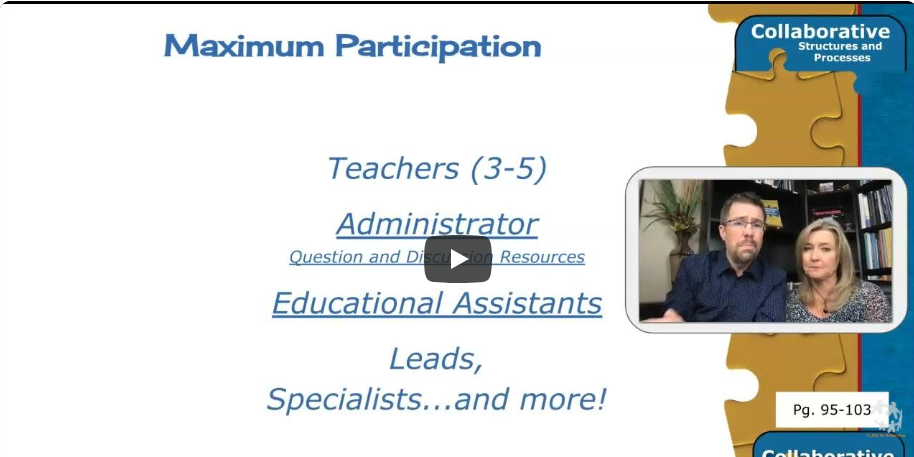
 | 4.8 - Introducing Collaborative Team Meetings: Maximum Participation - blog that describes the involvement of a number of people who come with varying perspectives. Accessing as many different voices around the table allows for diversity of thought and breadth of ideas. |
 | 4.9 - Examining Collaborative Team Meetings: Maximum Participation - blog that describes considerations to keep in mind when determining the participants involved in a collaborative team meeting. |
| 4.10 - Maximum Participation - video that describes the possible team members when establishing participation in collaborative team meetings. |
| 4.11 - Educational Assistants in Collaborative Team Meetings - Ep 74 - podcast that discusses why educational assistants are a critical voice to consider being included in collaborative team meetings and some strategies that schools are employing to have their support staff involved. |
| 4.12 - Team Norm Template - template for establishing team norms for collaborative team meetings (or other purposes in your organization) |
| 4.13 - Norms for Team Success - pdf guide that assists leaders in establishing and reinforcing team norms. |
| 4.14 - Collaborative Leader's Toolkit - Unpacking Team Norms - pdf document provides a structured opportunity for teams to assess, refine, and reinforce their norms to maximize their effectiveness. |
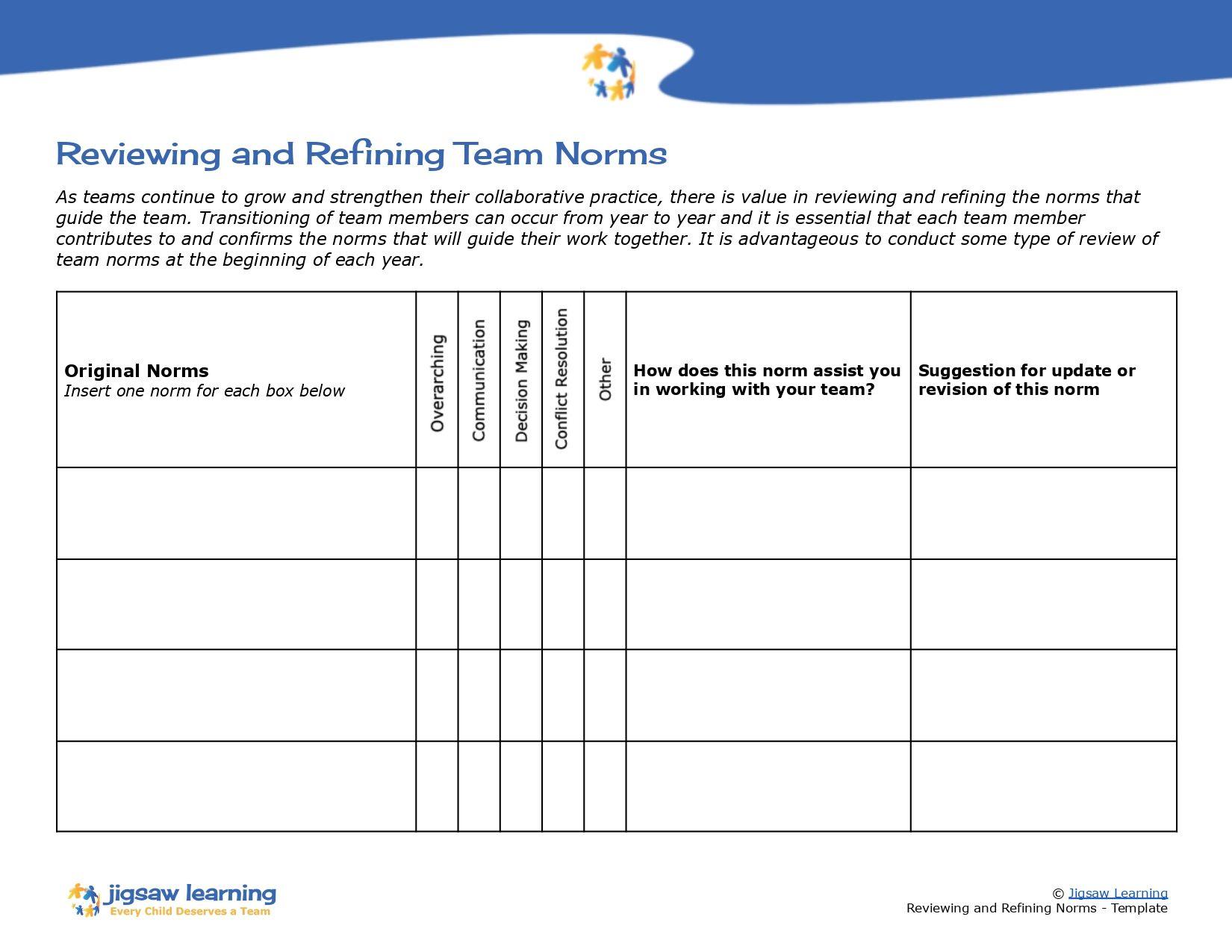
| 4.15 - Reviewing and Refining Team Norms - template designed for teams to grow and strengthen their collaborative practice by reviewing and refining the norms that guide the team. |
| 4.16 - Collaborative Team Meeting Role Cards - template that includes the four main role cards including a description of the primary roles for meetings, as well as two blank cards to add your own roles that fit your context. |
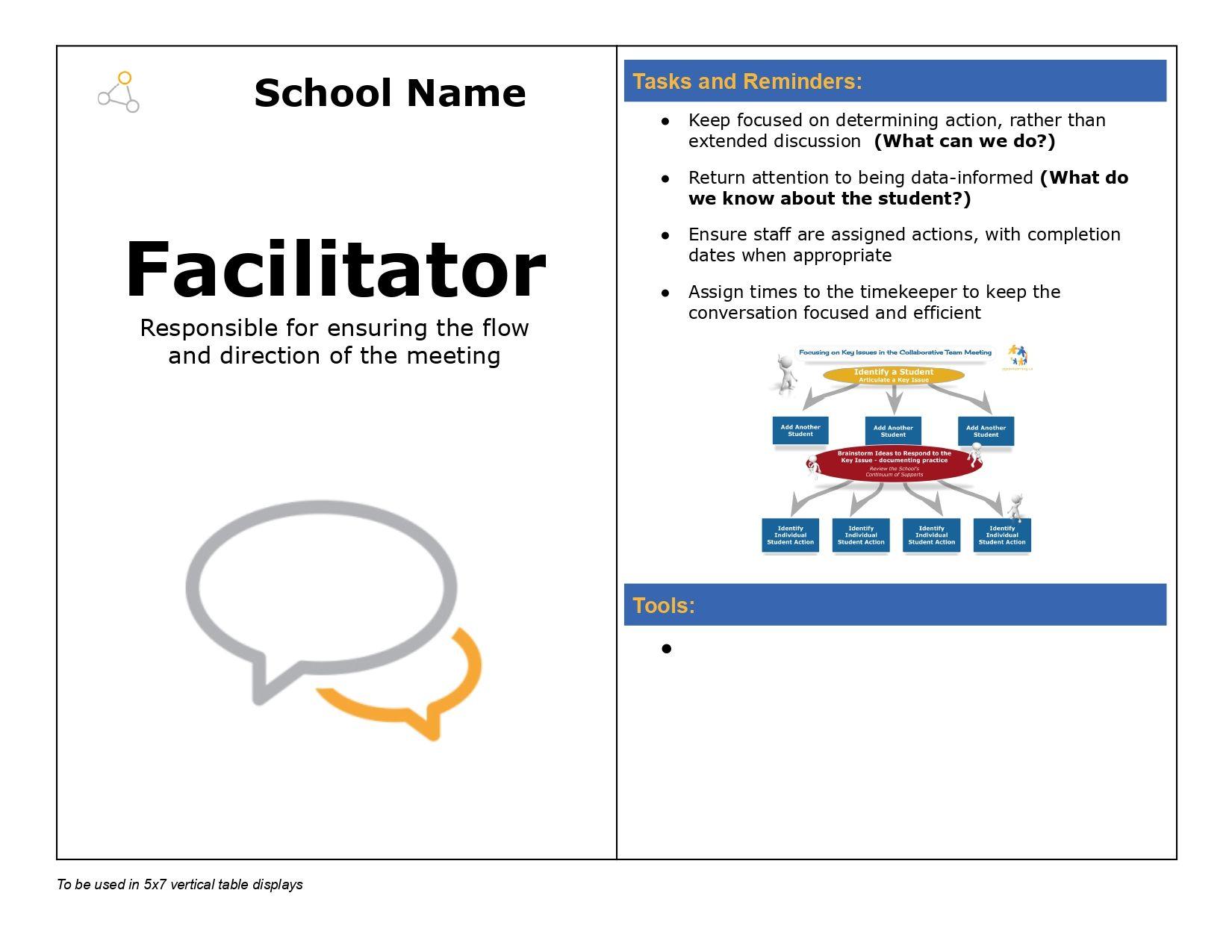
| 4.17 - Role Display Template - 5x7 display template is intended to be used in photo display frames where the front shows everyone the role the individual is assuming today, while the back includes tips, reminders and suggestions when taking on the role. |
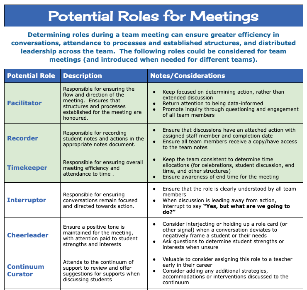
| 4.18 - Potential Roles for Meetings - this document provides a collection of potential roles for meetings, as well as basic descriptions for each of those roles. This list is by no means definitive, as there are countless other roles coming into existence in various school team meetings. |
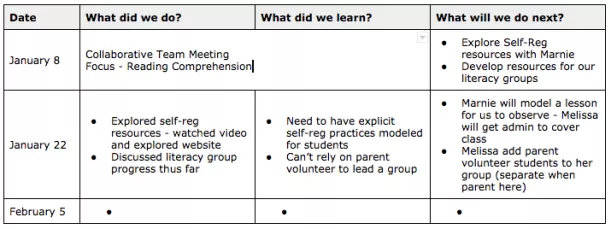
| 4.19 - Collaborative Team Meeting Agenda and Notes - this template features the agenda for a typical collaborative team meeting including all the structures and processes for a successful intentional meeting. It also includes space to record all your notes and provides clear direction for the facilitator of the meeting. |
| 4.20 - Ten Considerations to Transform Your Team Meetings - webinar that describes 10 considerations essential when engaging in collaboration, with multiple samples and resources shared. |
| 4.21 - CTM Exit Slip - an exit slip to be completed by participants, to provide feedback that may lead to adjustments to the master agenda and notes-taking document. |
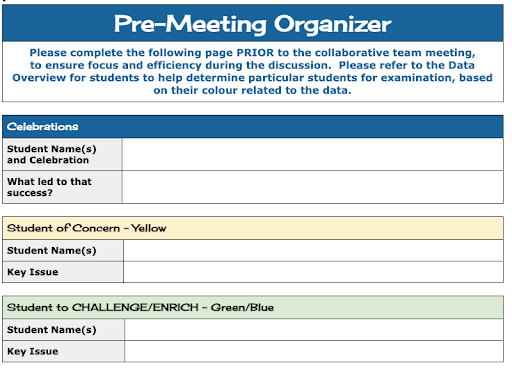
| 4.22 - Simplified Pre-Meeting Organizer - this template is a good starting point for schools embarking on using a pre-meeting organizer. This template is intended to be printed off to write reflections by hand to avoid lengthy descriptions. |
| 4.23 - Data-Informed Pre-Meeting Organizer - template to be completed prior to a collaborative team meeting, related to data colours, to help focus on specific students to initiate discussions. |
| 4.24 - Pre-Meeting Organizer - Data-Informed Statements - this pre-meeting organizer template reinforces the use of data to inform the celebrations, students of concern and students to enrich in the collaborative team meeting using a clause statement. |
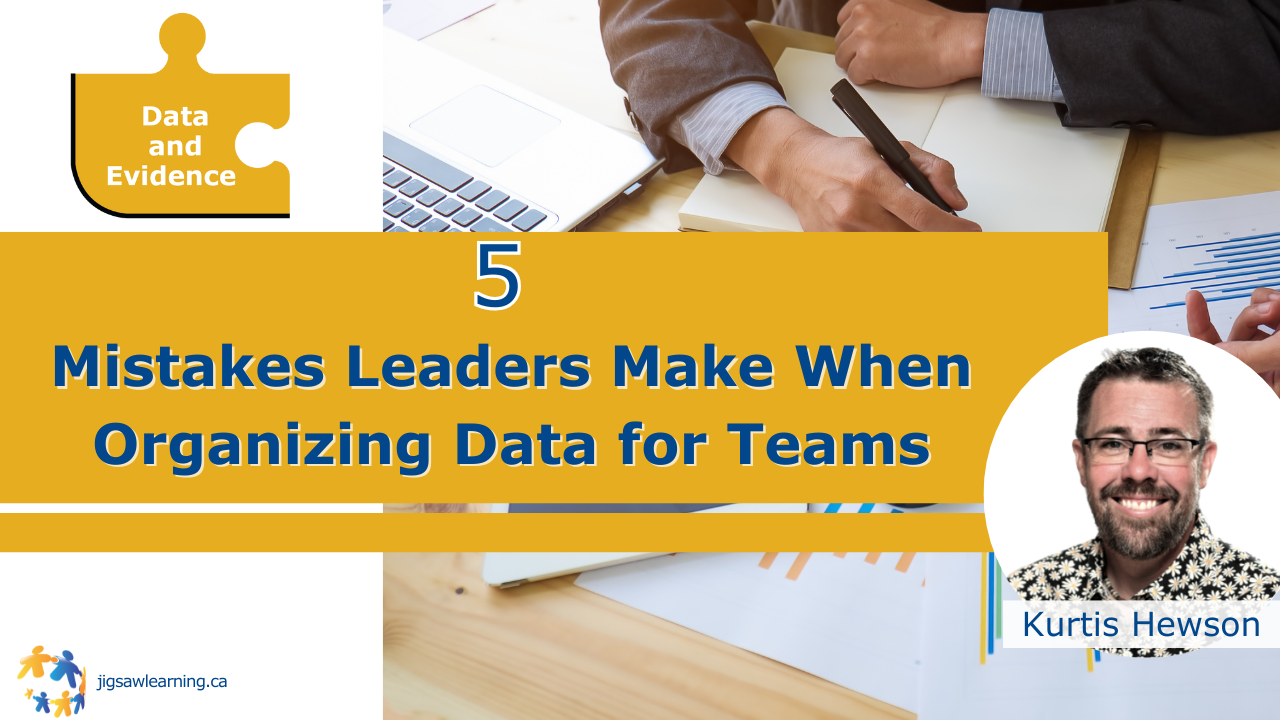
| 4.25 - Five Mistakes Leaders Make When Organizing Data - webinar focused on thoughtful considerations for organizing data for teams. |









Chapter 5 - Essential Processes for the Collaborative Team Meeting
| 5.1 - Collaborative Team Meeting Agenda and Notes - template that includes a segment of the meeting focused on celebrations which includes the specific identification of a student, a space for describing the celebration followed by a section that gathers "Why?" that celebration has occurred. This builds the benefit with the team that the evidence of their efforts is having an impact on our overall goal of student success. |
| 5.2 - The Psychology Behind Collaborative Team Meetings - Ep 10 - podcast addressing the contradictory statement "support the student by not focusing on them during the collaborative team meeting" as well as a number of collaborative structures and processes that are implemented intentionally to create psychological safety for staff as they build collective efficacy. |
| 5.3 - Examining Collaborative Team Meetings - Focus on Impact During Celebrations - blog that explains how a specific focus on celebrations can lead to the sharing of effective classroom practices. |
| 5.4 - Don't Skip Celebrations When Beginning Any Team Meeting! - blog explaining the importance of celebrations in all types of team meetings. |
| 5.5 - Don't Skip Celebrations: Why Celebrations are Powerful When Meeting in Teams - Ep 6 - podcast episode discussing the power of celebrations as an integral part of each and every team meeting. Celebrations are about more than just starting a meeting on a positive note, how identifying what we've done that has lead to a celebration matters and what are some considerations to take the discussion of celebrations to the next level! |
| 5.6 - Examining Collaborative Team Meetings - Shifting to Key Issues - blog that explains the specific process for designing an effective key issue in a collaborative team meeting. |
| 5.7 - The Goldilocks Effect: Establishing Effective Key Issues - blog that explains the key issue process, when conducted with fidelity, has the potential of formulating ideas to address key issues facing students and to expand and grow the professional practices of each person participating in the meeting. |
| 5.8 - Refining 'Just Right' Key Issues - resource that engages teams in the development of 'just right' key issues. |
| 5.9 - Establishing Effective Key Issues for Collaborative Team Meetings - Ep 67 - podcast that further explores the key issue process and provides some advice when endeavouring to establish more effective and succinct key issues for students to drive the collaborative team meeting. |
| 5.10 - Crafting Effective Key Issues in Collaborative Team Meetings - blog describing the crucial aspect of collaborative team meetings which is the key issue process, which helps teams shift their focus from individual students to broader, collective challenges that can enhance collective efficacy across the school. |
| 5.11 - Pre-Meeting Organizers - a collection of a number of pre-meeting organizers, including several with direct connections to data and evidence when determining students and key issues. |
| 5.12 - Ensuring Follow-Up for Actions Determined in the Collaborative Team Meeting - Ep 35 - podcast that focuses on how to follow-up on actions from collaborative team meetings. Kurtis and Lorna review the process that generates actions in the CTM and then offer considerations to ensure follow-up on actions from those meetings that are critical to Collaborative Response. |
| 5.13 - Examining Collaborative Team Meetings: Ensuring an Action Focused Process - blog posting that dives deeper into the need to remain action-oriented when engaging in the collaborative team meeting. |
| 5.14 - Supporting Complex Students by Not Focusing on Them in the Collaborative Team Meeting - Ep 36 - this podcast discusses why focusing primarily on your high needs students can actually have a negative impact on building a culture of Collaborative Response within your school. |
| 5.15 - Examining Collaborative Team Meetings - Determine Team Tasks - blog posting going deeper into team tasks and how they align with the collaborative planning layer for teams. |





Chapter 6 - Facilitating the Collaborative Team Meeting
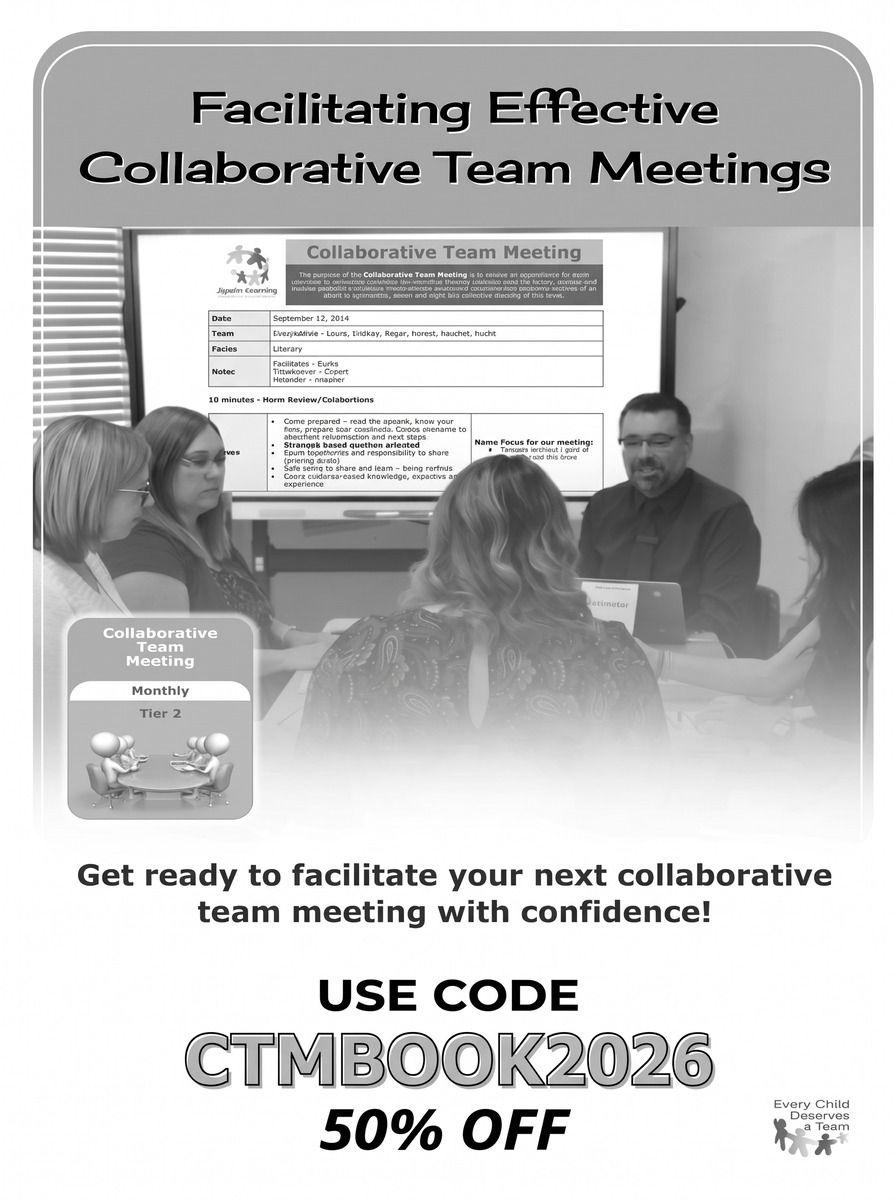
| 6.1 - Facilitating Effective Collaborative Team Meetings - online course that breaks down the essential elements of the collaborative team meeting and provides resources and insights for effective facilitation, with numerous video clips. Great when developing skill sets and understanding for multiple CTM facilitators on a staff team. |
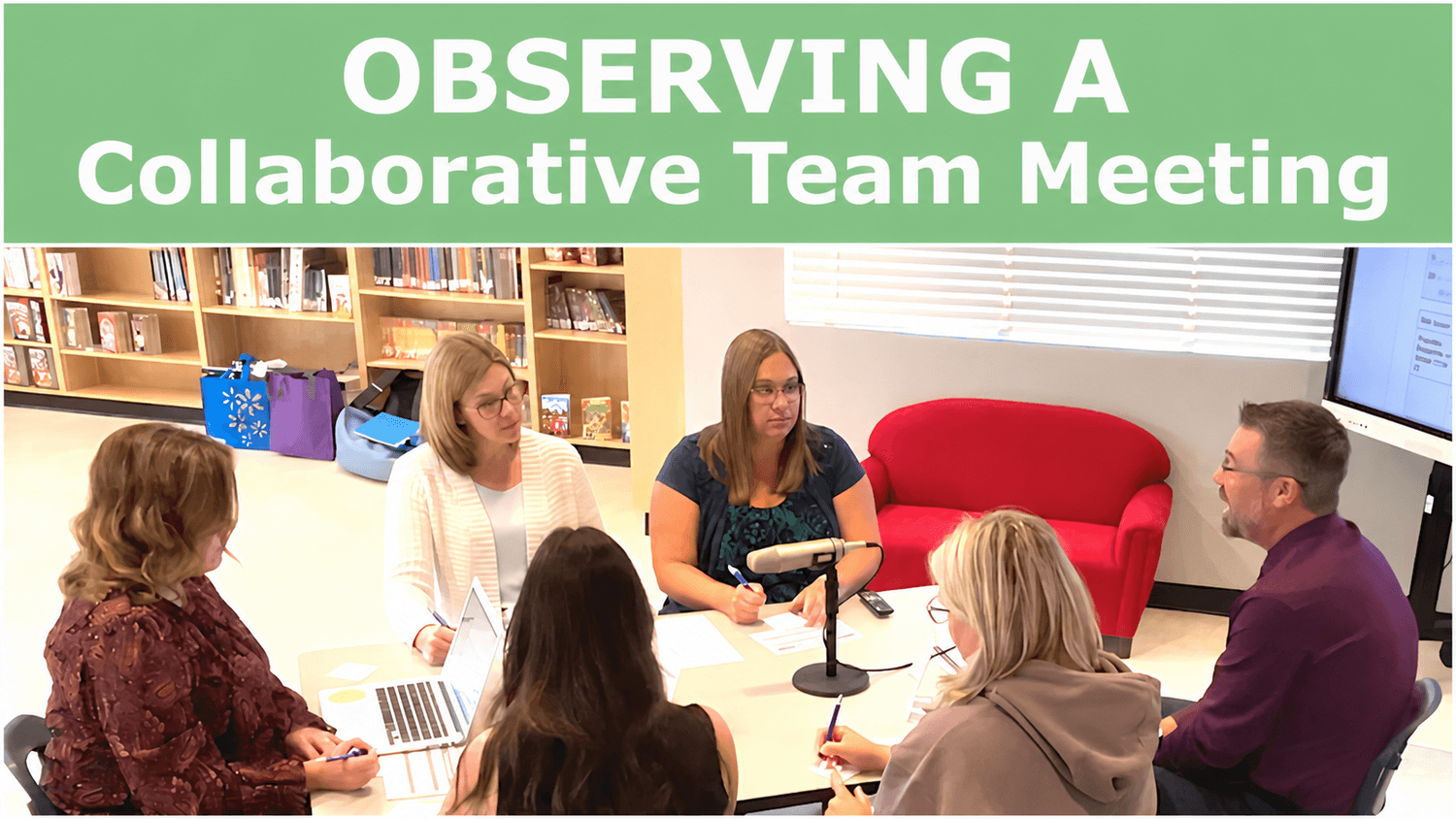
| 6.2 - Observing a Collaborative Team Meeting - this webpage contains a variety of CTM sample videos, to observe a collaborative team meeting being effectively facilitated. |
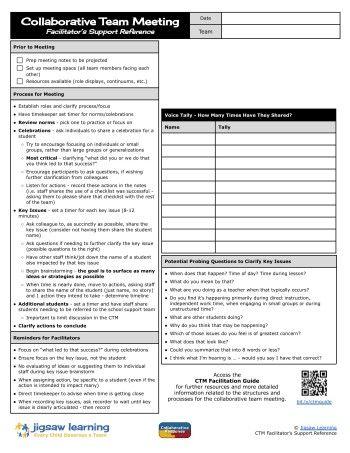
| 6.3 - CTM Facilitator's Support Reference - a one page reference document for facilitators, reminding of the process for the CTM, potential questions and a space to note team member names and make tallies for how often they are contributing (to ensure equality of voice in the CTM). |
| 6.4 - Team Meeting Discussion Cards - questions and discussion starters to use in a Collaborative Team Meeting to prompt challenging collaborative dialogue. |
| 6.5 - Examining Collaborative Team Meetings: Questions and Discussion Resources - blog posting sharing the role of questions and discussion cards in team meetings. |


Chapter 7 - Getting Started with the Collaborative Team Meeting
| 7.1 - Observing a CTM Organizer - template that serves as an observation organizer is valuable when having staff observe a collaborative team meeting and take notes of their observations in relation to key elements integral to the success of the CTM. |
| 7.2 - Observing a CTM Repository - this webpage includes numerous resources related to the CTM, including several video clips of CTMs in action, to potentially use when introducing the meeting to the larger staff team. |
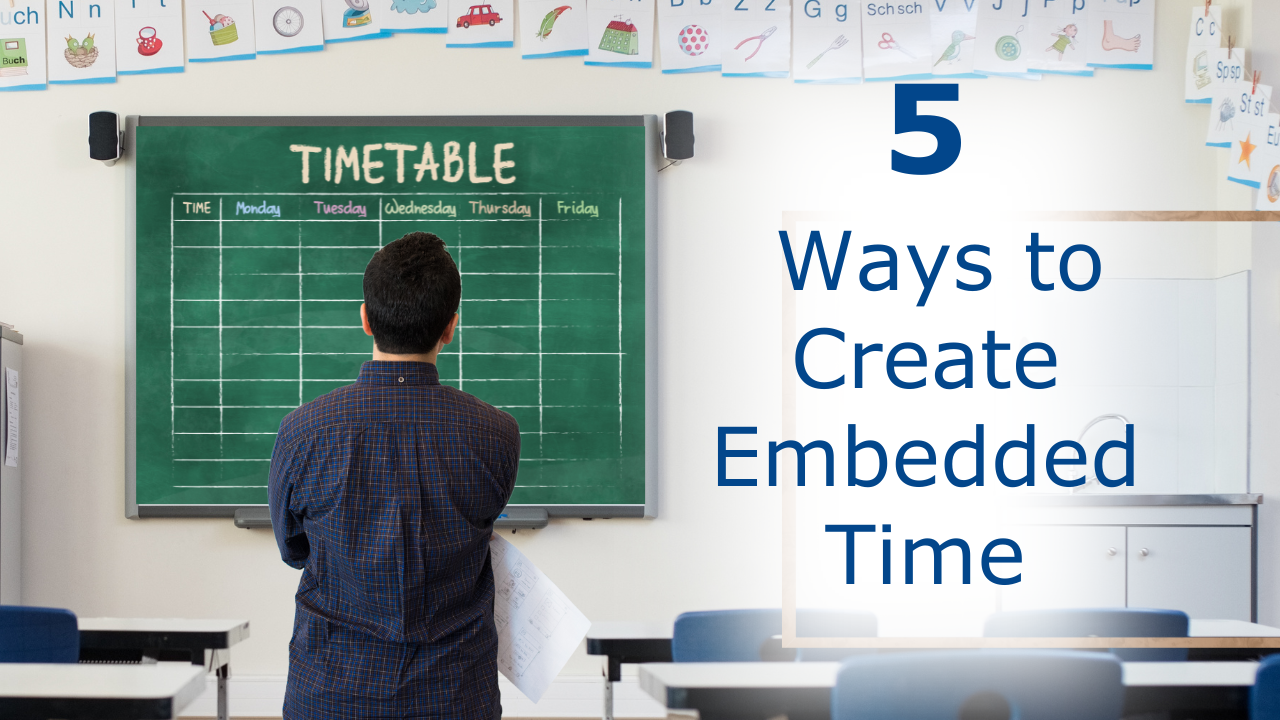
| 7.3 - Stop the Scramble! How to Embed Collaboration Time That Actually Works, Without Adding Time! - Kurtis and Lorna discuss 5 overarching ways schools can creatively embed time for staff collaboration in their school timetable. |
| 7.4 - 5 Ways to Create Embedded Time for Collaboration - this blog details five methods for embedding collaborative time into the existing school timetable. |


Chapter 8 - Moving Forward
| 8.1 - Collaborative Response at the District Level blog series - series of blog postings focused on breaking down Collaborative Response, including the collaborative team meeting, at the district level. |
| 8.2 - Hey Meeting Facilitators - Stop Doing Everything! Effective Use of Roles in Meetings - Kurtis Hewson shares the value of meeting roles, the three roles that every team meeting needs and how roles can help to alleviate some of the most common pitfalls we experience when teams come together. |
| 8.3 - The Power of Team Norms: Establishing and Reinforcing Norms for Team Success - Kurtis and Lorna Hewson share why norms are critical to establish for any team engaging in collaborative work but that just establishing norms is not enough. They need to be visible, practiced and reflected on regularly. Learn several strategies to establish and reinforce norms that have substantial impact on your collaborative culture. |
| 8.4 - Stop Chairing Your Team Meetings - Focus on Facilitation - Kurtis and Lorna Hewson debunk the idea of chairing team meetings, focusing on an essential mind shift towards facilitating that has a tremendous impact on collaborative cultures. |
| 8.5 - Don’t Skip Celebrations: Why Celebrations are Powerful When Meeting in Teams - Kurtis and Lorna Hewson discuss the power of celebrations as an integral part of each and every team meeting. |
| 8.6 - Clarity, Focus and Predictability: Why the Design of your Team Meeting Agenda Matters! - Kurtis and Lorna Hewson dive into why an intentionally designed agenda and notes document for your team meetings is critical. |
| 8.7 - Extending Key Issue Process Beyond the Student Conversation - Kurtis and Lorna break down the key issue process and how this powerful process can be utilized in other contexts beyond the student conversation. |